Groundbreaking Ceremony Ideas for Projects Big and Small
- Author: Ribbon Cutting Desk Editorial Team
- Checked by Ribbon Cutting Desk Editorial Team
- Most recently reviewed
- Posted
- In Groundbreaking
Good groundbreaking ceremony ideas change who takes part or what the moment shows, not the safety rules. Options include a classic line-up, a community-signed plan, a neighbour or student role, a simple home ceremony and an indoor version for bad weather. Every idea stays inside the area the contractor marks as safe.
Section of: Groundbreaking Ceremony: Meaning, Steps and Ideas
General information, not legal, insurance or safety advice. Follow the site safety officer and your local rules.
Cue-checked by the Ribbon Cutting Desk team: each fact above was matched to a source this page cites.
These ideas change the feel of a groundbreaking while keeping the same plan: a marked safe area, a short program and a clear cue. Start with the overview and the planning checklist; this page is the idea list.
What are the classic formats?
The classic formats are a line-up of guests turning soil together, a group hands-on-plan photo and a short remarks-then-action sequence. They work because they are simple and visible.
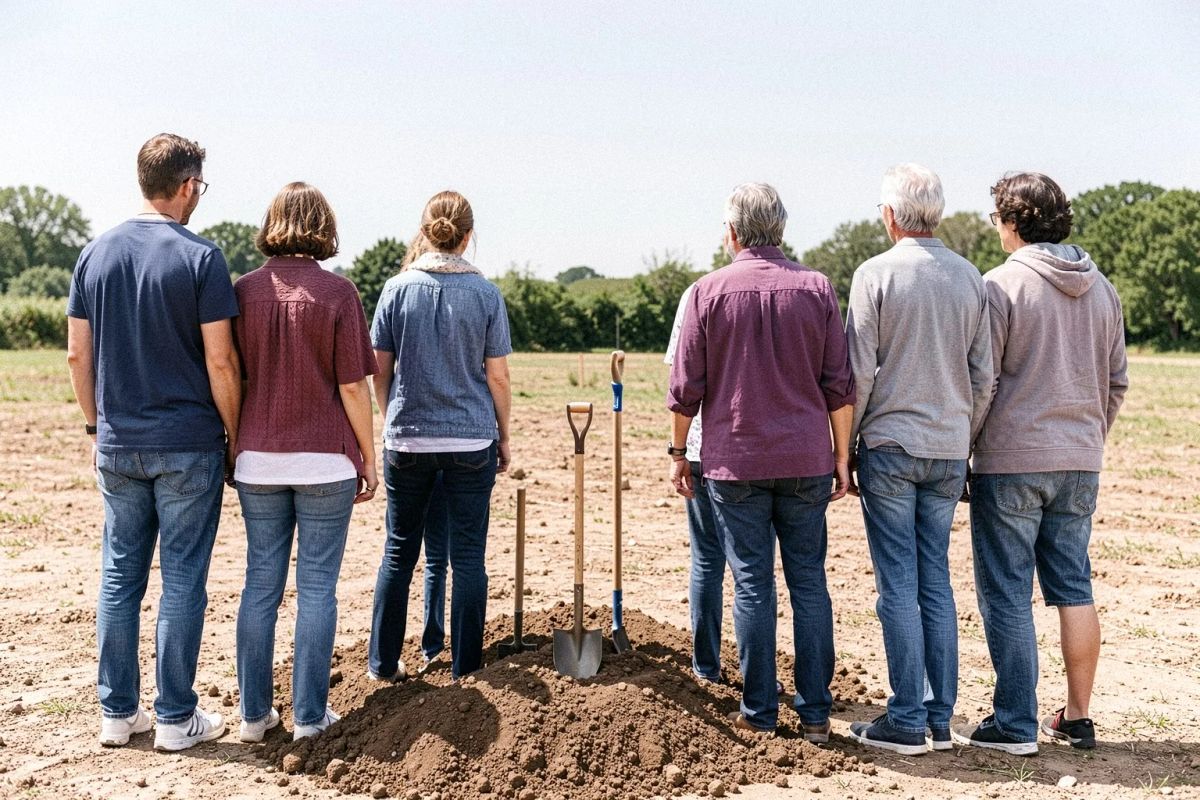
- Line-up and soil turn. The ceremony party stands side by side at a marked spot and turns soil on a count.
- Hands on the plan. The group gathers around a printed site plan on a table and places hands on it for the photo.
- Cue and applause. For sites where nobody should disturb the ground, the group raises a hand on the count and the host announces the start.
How can the community and schools take part?
Give people a small, visible, rehearsed role. Ideas:
- A neighbour reads a short welcome.
- Students deliver a thank-you or a letter about what the project means to them.
- A signed board. Guests sign a board or banner, kept for the finished building.
- Mixed ages. A child and an elder do the symbolic act together.
- A community host. A local group greets guests and hands out programs.
Ask the school or group about their own rules for student participation and photographs, and agree who supervises. Keep any role short and brief the person on where to stand.
What are good ideas for a home or small build?
A home ceremony is short and personal. Gather the family, the builder and a few friends at the edge of the site. Say two or three thank-yous. Place a hand on the plan or turn soil together. Take a photo.
Tips:
- Agree the date and the boundary with the builder first.
- Keep children and guests clear of equipment and open excavations.
- Keep it to ten or fifteen minutes, as an editorial suggestion.
- Offer chairs for older guests.
What ideas suit nonprofits and faith communities?
Focus on thanks and belonging. Options include a short reading or blessing in the community’s own tradition, a thank-you to donors and volunteers by name, a procession of members to the site, or a keepsake such as a signed card kept for the finished building. Keep any religious content to the community’s own form, and be sure it is welcome for guests of other backgrounds. A host can offer a neutral thanks alongside it.
What works when the weather is bad?
Plan an indoor version in advance. The National Weather Service says there is no safe place outside when thunderstorms are in the area. Indoor options:
- A short program in a covered space, with the soil turn replaced by hands on the plan.
- A live or recorded soil turn on the site by the contractor and a few people, with guests watching from shelter.
- A rescheduled date announced in the invitation as the fallback.
Decide the call time and who makes it. Light rain may need only umbrellas and a shorter program.
What safety limits apply to every idea?
Every idea stays inside the area the contractor approves. OSHA describes construction as a high-hazard industry, citing hazards such as falling from rooftops, unguarded machinery and being struck by heavy construction equipment. So: no guest uses equipment, no guest goes into excavations or active zones, the contractor can end the event if conditions change, and the host briefs guests before the first speech.
For accessibility, the ADA says covered entities must communicate effectively with people who have communication disabilities and provide aids and services when needed. Make sure each hands-on idea has an option for people who cannot kneel, reach or walk on rough ground, such as bringing the plan table to them.
Related pages: ideas for openings, groundbreaking speech for words, and groundbreaking invitation for what to tell guests.
People also ask
What can you do instead of a shovel photo?
Several formats work: a group places hands on a signed site plan, guests add a mark to a display board, a child and an elder together press a ceremonial button or switch, or the group simply raises a hand for a countdown. Pick an action that is visible, safe and quick, and one the group can do without any equipment.
How do you include the community?
Give neighbours, students or members a visible role: a short reading, a signed message board, a planting of a marker, or a place in the front row. Ask a community group to help host or greet. Keep their role brief and rehearsed, and tell them where they will stand and what the cue is.
Can a homeowner hold one?
Yes. A home build or renovation can have a short family-and-friends event before work begins. Invite the builder, keep it to ten or fifteen minutes and hold it away from the active area. Agree the date, any safety items and the boundary with the builder first, and keep children and guests clear of equipment.
How do you keep it safe on an active site?
Follow the contractor and the site safety officer. Use a marked ceremony area away from active work, brief guests at the start, put helpers at the boundary and ask the contractor whether equipment should be paused. No guest should operate equipment. If conditions change, the contractor's call overrides the program.
What is a simple idea for a small project?
Gather the owner, the builder and a few neighbours at the edge of the site, say two or three thank-yous, and have the group turn soil together or place hands on the plan for a single photo. Total time can be ten minutes. Add a short note to guests about footwear and parking.
Our sources
- Construction (OSHA) (osha.gov)
- Lightning Safety (National Weather Service) (weather.gov)
- Effective Communication (ADA.gov) (ada.gov)
Related guides
- Groundbreaking Ceremony: Meaning, Steps and Ideas
What a groundbreaking ceremony is, who takes part, the typical sequence, the site-safety rules guests follow and how it differs from real construction.
- Groundbreaking Ceremony Invitation Wording and Samples
Groundbreaking invitation wording: what to include, formal and friendly samples, email and letter versions, site-safety and dress notes, timing and RSVP.
- Groundbreaking Ceremony Speech Examples and What to Say
Original groundbreaking speech wording: structure, welcome, why the project matters, thank-yous, the soil turn, plus 60-second and 3-minute versions.
- How to Plan a Groundbreaking Ceremony: Program and Checklist
Plan a groundbreaking ceremony: check with the contractor first, set guests, roles, site safety and access, an example program and a checklist by week.